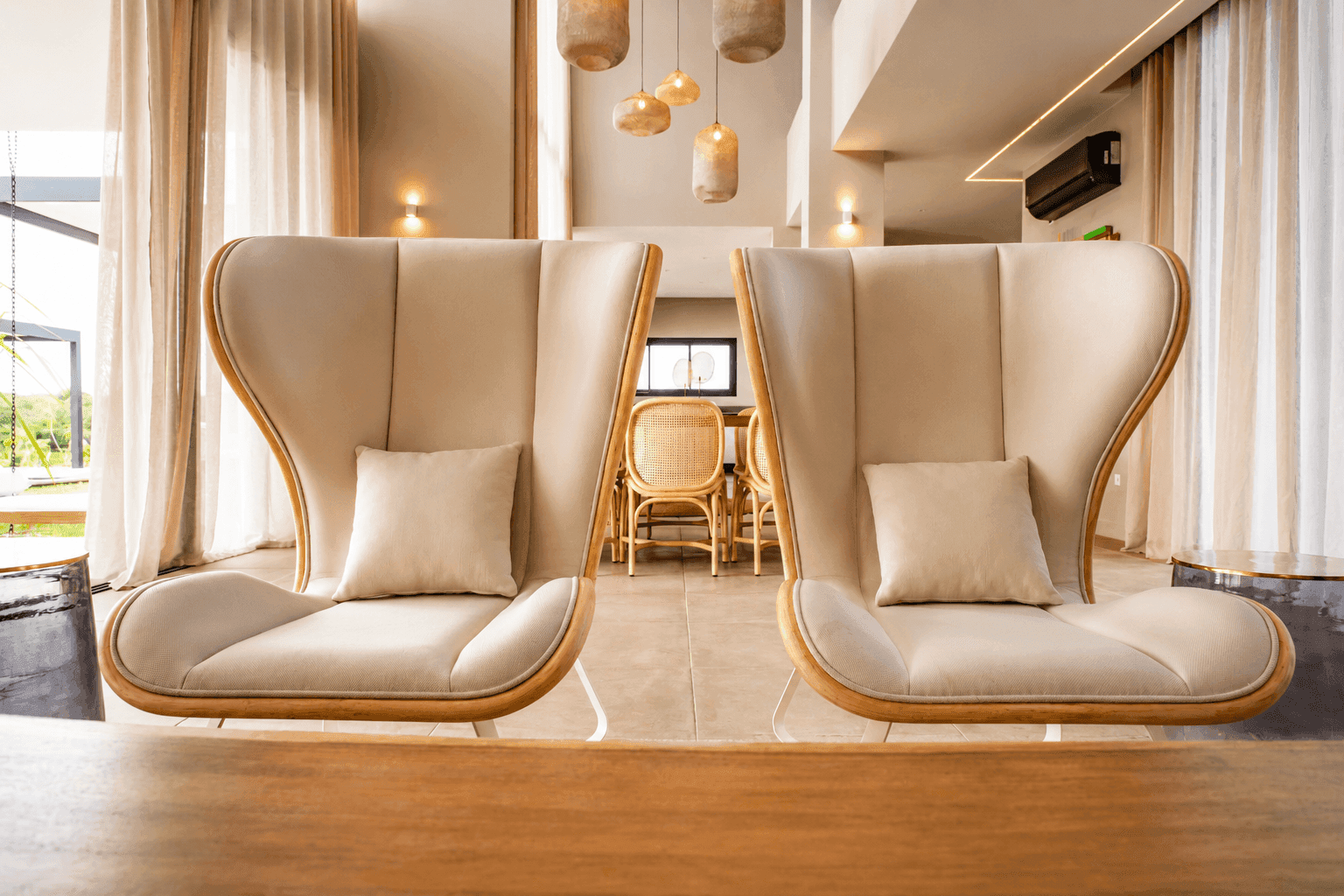
Wood is probably the most present material in a furnishing project, and the most misunderstood. Behind a single word lie very different realities, which share neither the same use, nor the same cost, nor the same way of ageing.
Solid and veneer: two logics
Solid wood is cut from the mass. It offers a presence, a repairability and a nobility without equal, but it moves with humidity and remains heavier and more costly. Veneer applies a fine sheet of noble wood onto a stable substrate. Done well, it offers the beauty of wood with greater dimensional stability, ideal for large surfaces.
Neither is superior in itself. Solid wood asserts itself where the material will be touched, used, sometimes restored. Veneer suits large panels and variable climates, where stability comes first.
Oil or lacquer: a question of use
The finish changes everything. An oil penetrates the wood, respects its feel and is easily repaired, but requires regular upkeep. A lacquer forms a protective film, more resistant to stains and water, but harder to touch up locally. The right choice depends on the real use of the piece, not on a matter of principle.
The right wood is not the rarest: it is the one whose finish matches the life it is meant to lead.
Thinking about patina
Wood lives and evolves. Some species darken, others lighten, all take on a patina with time and light. Anticipating this evolution means choosing a material that will still be beautiful in ten years, and not only on delivery day. It also means, in our latitudes, accounting for a sun and a humidity that accelerate these transformations.